

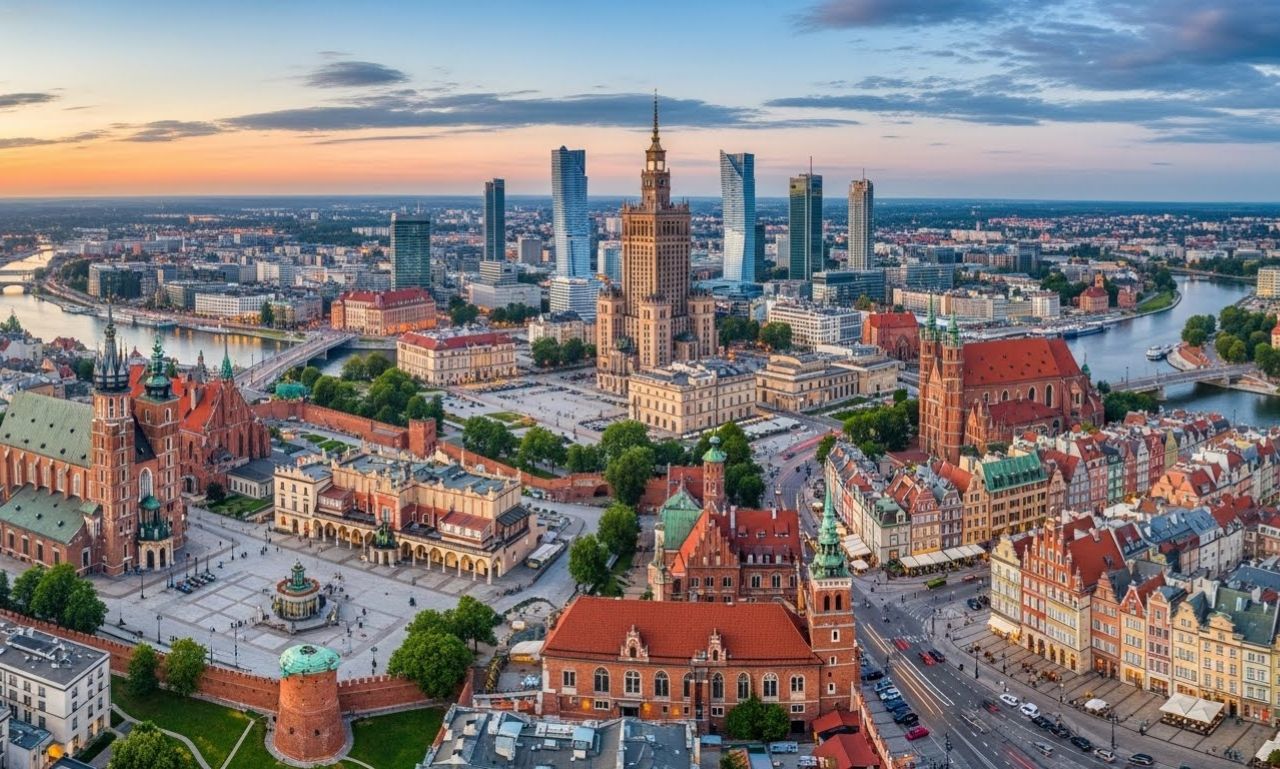
Poland cities offer a remarkable blend of history, modern development, cultural depth, and natural beauty. Whether you are interested in medieval architecture, vibrant nightlife, scenic riverfronts, or tech-driven urban spaces, the cities across Poland present a wide variety of experiences. From well-known urban centers like Warsaw and Kraków to emerging destinations such as Białystok, Rzeszów, and Toruń, travelers and researchers can uncover endless stories hidden within these dynamic locations. This article explores the most significant Poland cities, highlighting their historical evolution, iconic attractions, cultural richness, and modern transformations.
1. Warsaw: The Reborn Heart of Poland Cities
Warsaw, the capital, stands as one of the most influential Poland cities, combining resilience with rapid modernization. Nearly destroyed during World War II, the city was courageously rebuilt, earning its Old Town a UNESCO World Heritage designation. Today, Warsaw features a striking contrast between restored historic quarters and sleek skyscrapers.
Visitors often explore the Royal Castle, Old Town Market Square, and the Royal Route, each representing Poland’s complex past. Meanwhile, modern Warsaw thrives with financial districts, research institutions, and modern culinary scenes. The urban green spaces such as Łazienki Park and the Vistula river boulevards make Warsaw not only a political and economic center but also a pleasant city for leisure.
2. Kraków: The Cultural Jewel Among Poland Cities
Kraków remains one of the most iconic and visited Polish cities. Specifically, known for its preserved medieval architecture and artistic environment, Kraków offers an atmosphere of charm and deep historical significance. At the heart of the city, the Main Market Square is one of the largest in Europe, surrounded by historic buildings, churches, and market halls.
In addition, Wawel Castle and Wawel Cathedral reflect centuries of Polish monarchy and religious heritage. Meanwhile, the Kazimierz district adds another dimension with its Jewish cultural revival, boutique cafés, and art galleries. Moreover, Kraków’s expanding tech and student population ensures the city maintains a youthful and vibrant energy.
3. Gdańsk: A Maritime Symbol in Polish Cities
Similarly, Gdańsk, located on the Baltic coast, holds a unique identity among Polish cities. Notably, famous for its shipbuilding legacy and role in the rise of the Solidarity movement, Gdańsk is both historically and politically significant. In particular, its waterfront architecture, featuring colorful merchant houses, makes it one of the most picturesque cities in the country.
Furthermore, the Long Market, Neptune Fountain, Artus Court, and St. Mary’s Church are essential landmarks representing Gdańsk’s golden age as a major European trading port. At the same time, modern Gdańsk continues to develop as a center for culture, business, and marine industries, attracting visitors from around the world.
4. Wrocław: The City of Bridges and Cultural Fusion
Wrocław stands out among Poland cities for its extensive network of bridges and islands, giving it the nickname “the Venice of Poland.” Its historic roots stretch across various cultural influences, including Bohemian, Austrian, German, and Polish heritage.
The Market Square, adorned with Gothic and Baroque buildings, therefore forms the heart of the city. Meanwhile, Ostrów Tumski, the oldest part of Wrocław, showcases impressive cathedral architecture and tranquil streets that are perfect for evening walks. In addition, the city is known for its student population, lively festivals, and the humorous “Wrocław dwarfs,” tiny sculptures scattered throughout the city.
5. Poznań: A Business and Academic Hub Among Polish Cities
Similarly, Poznań is one of the most economically dynamic Polish cities. Specifically, it is known for its trade fairs, startups, and well-established universities, which together blend professionalism with culture. Moreover, the Old Market Square, with its colorful Renaissance buildings and playful billy goats clock performance, is among the city’s most beloved attractions.
Finally, Poznań’s significance in Polish history is evident at Ostrów Tumski, where the first Polish rulers established their power.Today, the city’s modern districts, green parks, and growing transportation network make it a comfortable location for both entrepreneurs and tourists.
6. Łódź: The Creative Powerhouse of Poland Cities
Łódź has emerged from its industrial past to become one of the most creative and artistic Polish cities. Originally a center of textile manufacturing, the city has since reinvented itself with contemporary culture, film production, and digital innovation. Furthermore, the famous Piotrkowska Street, one of the longest commercial streets in Europe, offers a vibrant mix of restaurants, boutiques, and monumental murals.
The Manufaktura complex, a transformed textile factory, blends retail, art, and entertainment in a single large space. Łódź is particularly known for its film school, producing many acclaimed filmmakers. Its industrial-chic aesthetic and creative energy make it a standout among modern Poland cities.
7. Lublin: A Gateway of Cultures in Poland Cities
Lublin, one of the oldest Poland cities in the east, serves as a cultural bridge between Western and Eastern Europe. Its Old Town is admired for well-preserved medieval streets, churches, and townhouses. Lublin Castle and its famous Byzantine-style Chapel of the Holy Trinity reflect centuries of cultural fusion.
Today, Lublin hosts international festivals, academic conferences, and cultural events. The city is known for its welcoming atmosphere and thriving student population, giving it a modern and youthful identity while preserving its historical core.
8. Szczecin: A Green Coastal Gem Among Poland Cities
Szczecin, located near the German border, is notable among Polandcities for its maritime traditions and extensive green spaces. The city’s layout, inspired partly by Parisian designs, includes wide avenues and elegant buildings. The Wały Chrobrego terraces offer scenic views of the Oder River, while the Philharmonic Hall stands out as a modern architectural landmark.
Szczecin’s port activities, parks, and cultural venues contribute to its status as a growing tourism and business destination.
9. Toruń: The Medieval Treasure of Poland Cities
Toruń is one of the most historically rich Polish cities, notably known as the birthplace of Nicolaus Copernicus and for its beautifully preserved medieval architecture. Consequently, the Gothic buildings of Toruń’s Old Town earned the city a UNESCO World Heritage designation.
In addition, famous for its gingerbread tradition, Toruń offers charming streets, medieval fortifications, and astronomical heritage sites. Moreover, its combination of cultural heritage and university life makes it a compelling destination.
10. Katowice: A Modern Center in Poland Cities
Katowice, located in the Silesian region, has transformed from an industrial coal and steel hub into one of the most contemporary Poland cities. The city’s skyline features futuristic structures such as the Spodek Arena and the Silesian Museum complex, blending industrial heritage with modern design.
Katowice is part of the Silesian Metropolis, a large urban area known for innovation, transport networks, and cultural events. Music festivals and art spaces have made the city increasingly attractive to young professionals and tourists.The Emerging Poland Cities Worth Watching
In addition to the major centers, several smaller Poland cities are rapidly gaining attention:
Rzeszów
A growing tech hub known for aviation and innovation.
Białystok
A green city with access to national parks and multicultural heritage.
Olsztyn
A lakeside city offering natural scenery and relaxed living.
Kielce
Known for geology, trade fairs, and scenic landscapes.
These cities reflect the expanding diversity and development happening throughout Poland.
Why Poland Cities Continue to Rise
The increasing popularity of Poland cities can be attributed to:
-
Rich cultural and historical landscapes
-
Affordable travel and living costs
-
Expanding transportation networks
-
Strong economic growth and innovation
-
Vibrant festivals, arts, and nightlife
-
Well-preserved natural and architectural beauty
Poland cities offer something for everyone—students, professionals, historians, tourists, and nature enthusiasts.
Conclusion
Poland cities present a multifaceted world where history meets progress, and tradition blends with modernity. Each city offers unique attractions, cultural depth, and engaging environments. Whether exploring major centers like Warsaw, Kraków, and Gdańsk or discovering emerging cities such as Rzeszów and Białystok, visitors and readers can appreciate the dynamic character of Poland. As the country continues to grow economically, culturally, and technologically, its cities remain vibrant gateways to the heart and soul of Central Europe.
 admin
admin